
Tetelestai!
by Dale Reeves
Story Pastor
The Roman Governor Pontius Pilate found no lawful basis for killing Jesus. He wanted to release him. But the people kept shouting, “Crucify him! Crucify him!” Pilate demanded, “What crime has he committed? I have found no reason to sentence him to death. So I will have him flogged, and then I will release him.”
But the mob shouted louder and louder, demanding that Jesus be crucified, and their voices prevailed. Because this type of death was so cruel, Roman citizens were never crucified. It was reserved for slaves and foreigners who were criminals. After the mock trial was over, Pilate uttered the words, “IBIS AD CRUCEM”—“YOU WILL GO TO THE CROSS!”
As Jesus was led away, he was made to carry his own cross on the way to the Place of the Skull, Golgotha. Two others, both criminals, were led out to be executed with him. When they came to Golgotha, they nailed him to the cross—fulfilling what had been prophesied in Psalm 22 a thousand years earlier. The two criminals were also crucified—one on his right and one on his left.
The Death
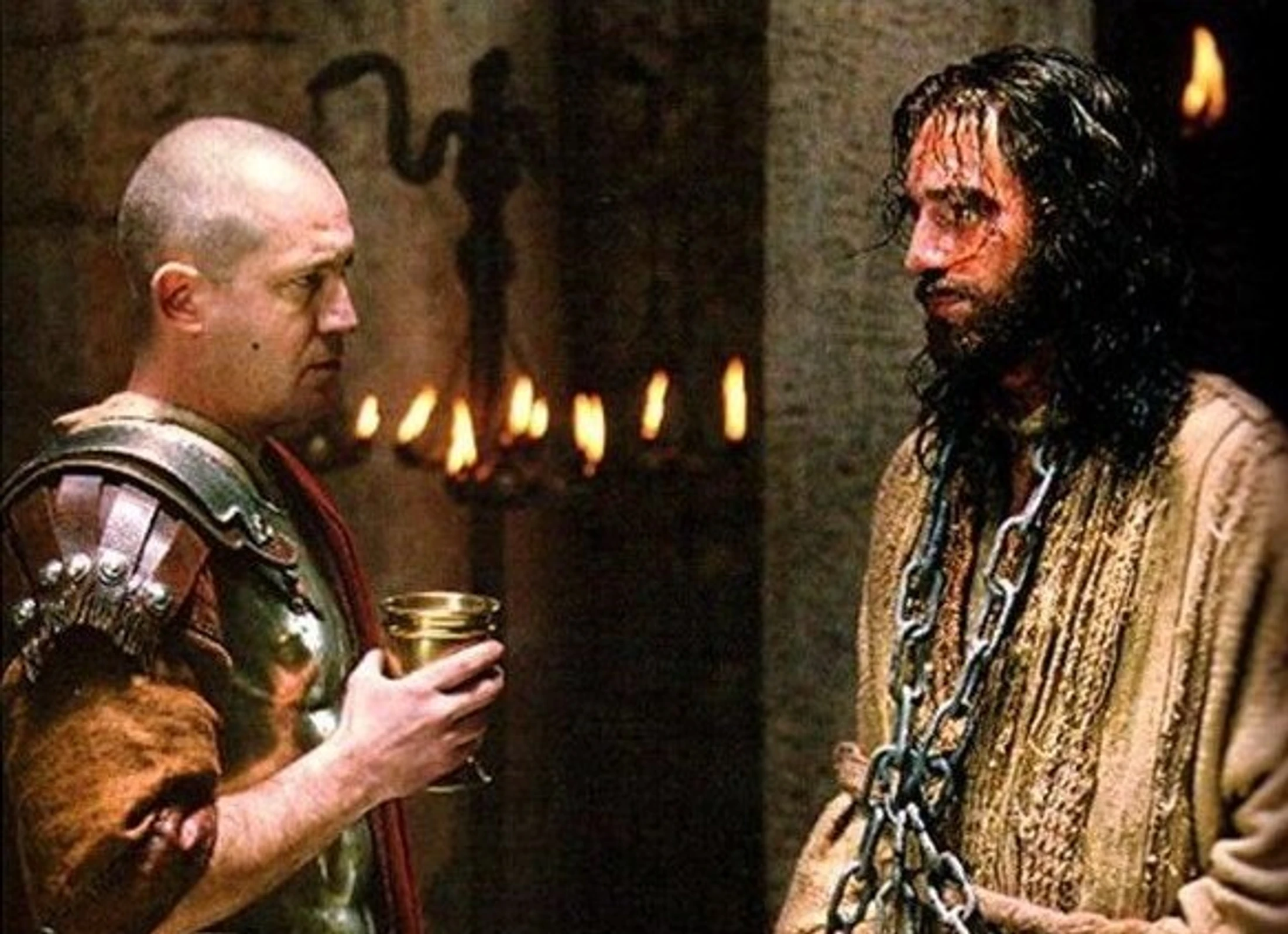
Then Jesus, suspended between Heaven and earth, with blood oozing from his wrists, his back, his forehead, his feet, mustered enough energy to pull himself up and exclaim his first words from the cross, “Father, forgive them, for they do not know what they are doing.” Ignoring his words, the soldiers gambled for his clothes by throwing dice. Even while experiencing the horrible pain of crucifixion, Jesus was praying for the very people who had caused his indescribable suffering.
The thieves hanging on both sides of him cursed Jesus, but, as time elapsed, one of them had a change of heart, and he asked Jesus to remember him when he had come into his kingdom. The Son of God turned toward him and promised, “Today, you will be with me in Paradise.”
As Jesus continued suffering on the cross, he saw his mother Mary standing near the apostle John and tenderly cried out, “Woman, behold your son.” He turned his gaze toward John and said, “Behold your mother.” He had entrusted the care of his mother to
one of the disciples closest to him, John, the apostle of love.
Jesus had been nailed to the cross at about 9:00 am that morning. Three hours later, at noon, darkness fell across the whole land until three o’clock. It was as if God the Father could not bear to look upon the suffering of his Son as he bore the sins of the whole world on his shredded body on the cross. At about three pm, Jesus called out with a loud voice, “Eli, Eli, lema sabachthani?”which means “My God, my God, why have you abandoned me?” The sinless Son of God had to be spiritually separated from the intimate relationship with his Father because he was reconciling the world to him. That is the cost he paid for us!
Jesus knew that his mission was now finished, and to fulfill Scripture he uttered, “I am thirsty.” A jar of sour wine was nearby, so a Roman soldier soaked a sponge in it, put it on a hyssop branch, and lifted it up to his lips. When Jesus had tasted it, he had just enough
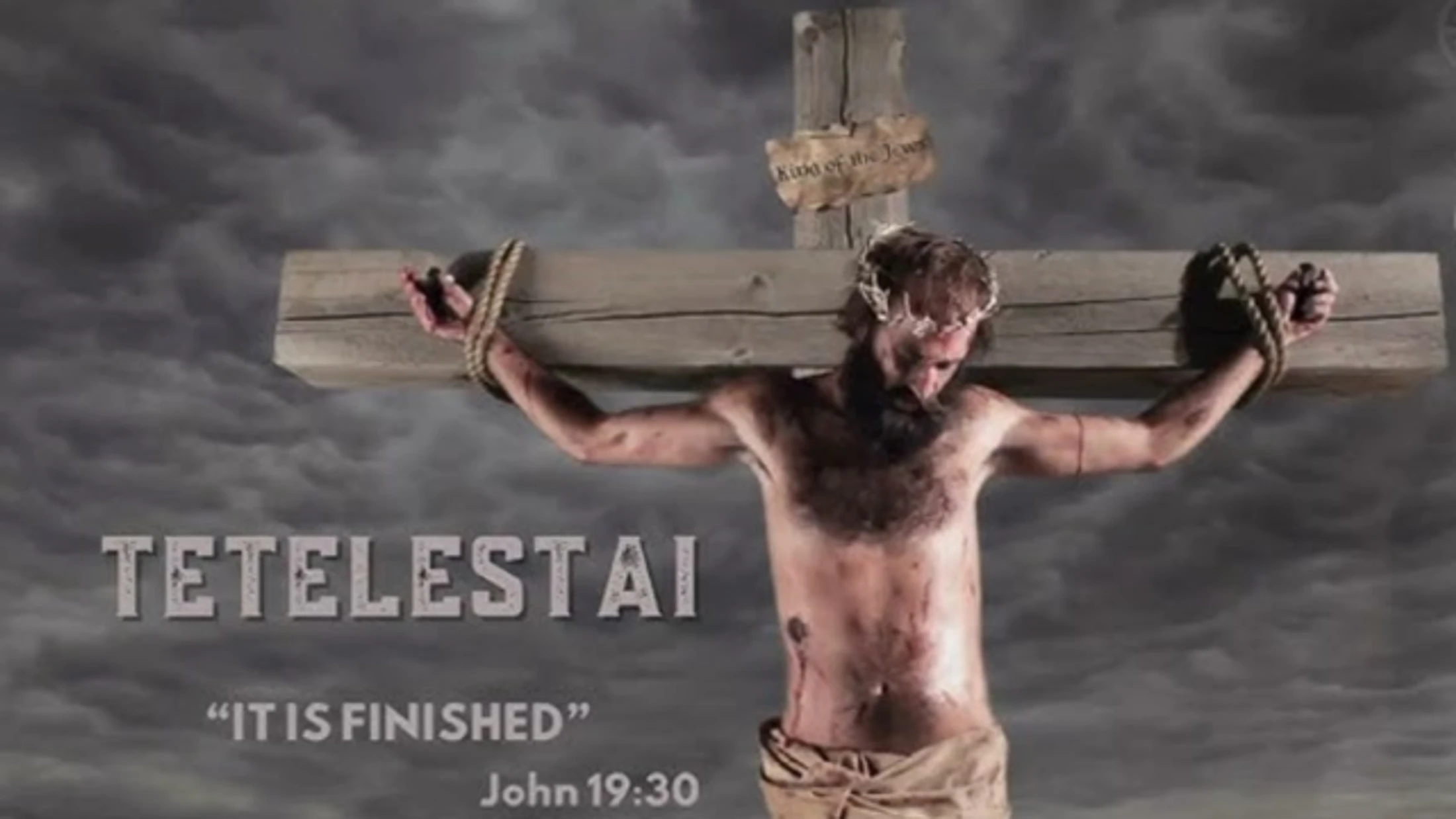
breath remaining to cry out with a loud voice of victory, “Tetelestai,” . . . “IT IS FINISHED!” IT IS ACCOMPLISHED. REDEMPTION HAD BEEN PAID FOR YOU AND ME!
When Jesus exclaimed the words, “It is finished” on the cross, he likely spoke Aramaic. The Gospel of John was written in Greek, and John used the word “Tetelestai” which means, “It is finished” (John 19:30). The word comes from a root word that means “to finish, complete, or bring to an end.” In ancient times, in a business context, it meant “paid in full,” as might be written on a receipt to indicate that a debt had been paid. In a judicial context, the phrase meant “fully served.” And in a military context, the phrase meant “battle won.” When Jesus died on the cross for you and me two thousand years ago, he paid our sin debt in full, he “served our sentence,” and he has already won whatever battle we are currently facing. IT IS FINISHED. JESUS HAS WON!
Jesus triumphed over the works of the devil on the cross. The authority of Satan had been vanquished. The light of the sun was now gone. And, suddenly, the curtain in the sanctuary in the Temple was torn down the middle, from top to bottom. After hanging on the Roman cross for six hours, Jesus looked heavenward and exclaimed, “Father, I entrust my spirit into your hands.” And with those words he breathed his last. God the Father responded. The earth shook, rocks split apart, and tombs opened, and the bodies of many godly men and women who had died were raised from the dead. For death had been defeated by the work of Jesus on the cross.
The Roman officer overseeing the execution witnessed all these events, then worshiped God and proclaimed, “This man truly was the Son of God.”
The Burial
When all the crowd that came to The Place of the Skull witnessed the six hours of suffering Jesus endured on the cross, they went home in deep sorrow. Their dreams for the Messiah’s takeover had been dashed. Fear and hopelessness had set in. But Jesus’ friends, including the women who had followed him from Galilee, stood at a distance watching.
It wasn’t unusual for the Romans to leave bodies on crosses for several days until beasts and birds of prey ate them and their bodies started to decay—a warning to all onlookers of the punishment that would be brought upon lawbreakers. But this practice was against the Jewish law which specified that a body should not be allowed to hang overnight. And since the day following was the weekly Sabbath, the Jewish leaders were particularly insistent that the bodies be removed. The Romans pulverized the legs of the two thieves with clubs to hasten their deaths. But, when they came to Jesus, his body had already breathed its last, so they didn’t need to break his legs—fulfilling the prophecy that none of the bones of the Lamb of God would be broken. To be certain of his death, a soldier pierced Jesus’ side with a spear, puncturing both the heart and the membrane surrounding it so that blood and water flowed freely from his side.
Though Christ’s enemies intended that Jesus’ grave be that of a common criminal, it is remarkable that a prophet, seven hundred years earlier, had foretold that the Lord would be buried with the “rich.” And, so Joseph of Arimathea (a town situated north of Jerusalem), a member of the Jewish council but secretly a disciple of Jesus—and a man of wealth—took a risk and approached Pontius Pilate and asked for the body of Jesus to be released to him.
Amazingly, and it can only be explained because of divine providence, Pilate granted his wish and released the body of Jesus to Joseph of Arimathea. So Joseph, along with another member of the ruling council who had once visited Jesus at night, Nicodemus, took Jesus’ body away. Following Jewish burial custom, they took seventy-five pounds of perfumed ointment made from myrrh and aloes, and they wrapped Jesus’ body with the spices in long sheets of linen cloth. This was an insanely extravagant amount of spices, the kind of burial you would only see for a king or someone of great prominence.
The fact that these men provided spices, and anointed his body for burial, clearly reveals that they had not grasped the significance of Psalm 16, that the Messiah’s flesh would not experience corruption in the grave. They fully expected the corpse to decay and return to the dust.
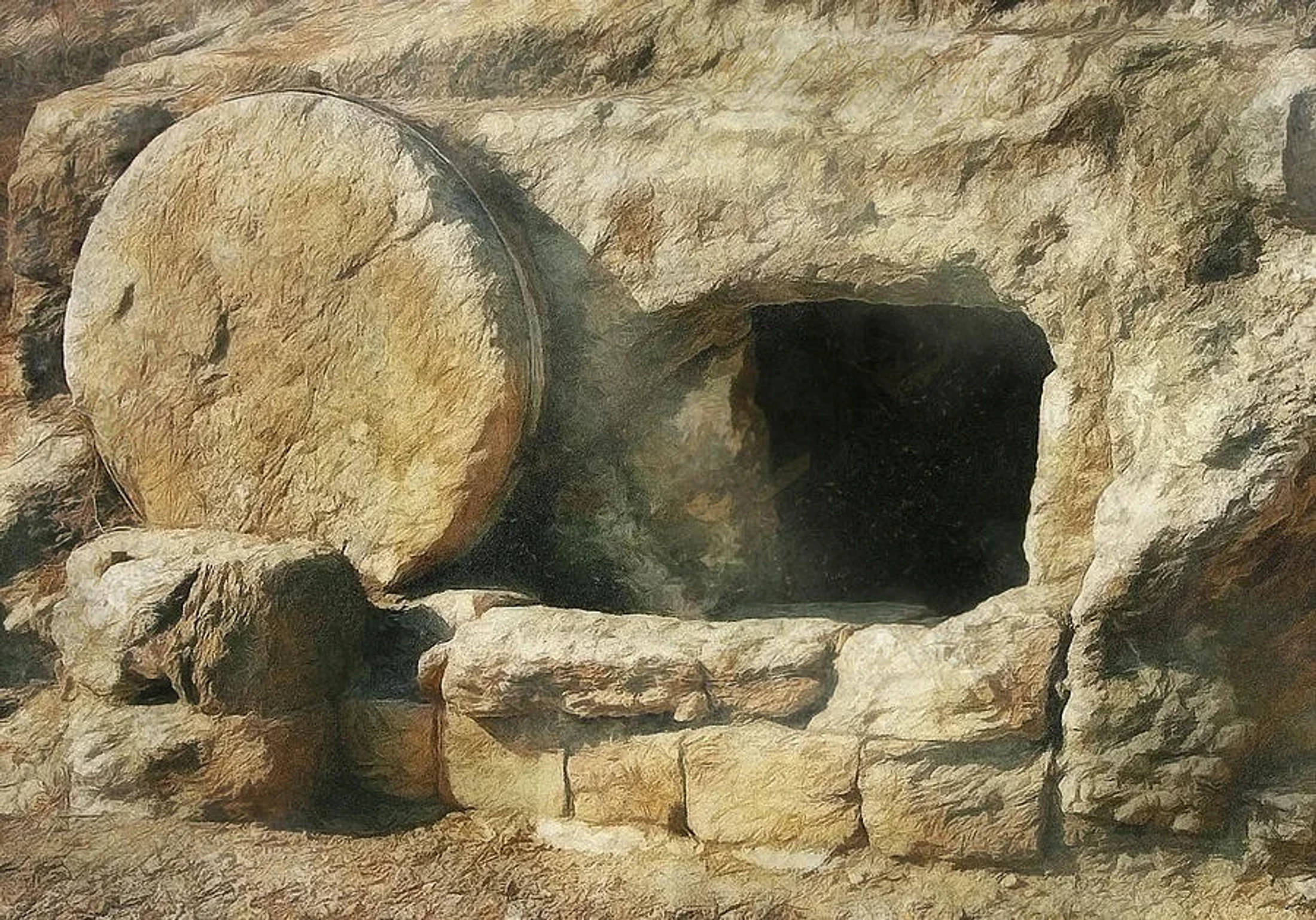
It was essential that the location of the tomb be readily known, in view of the fact that some would deny Jesus’ resurrection, and had already warned Pilate about the trickery Jesus had predicted that he would rise from the dead. The place of Jesus’ crucifixion was near a garden, where there was a new tomb that belonged to Joseph, never used before, which he had cut out in the rock. Because it was the day of preparation for the Jewish Passover and since the tomb was close at hand, they laid Jesus there. They rolled a great stone in front of the opening of the tomb, and departed.
Jesus was buried in the tomb of a very prominent man. His tomb was not shrouded in obscurity. As Joseph went about his business in giving Jesus a rich man’s burial, Mary Magdalene and some of the other women were sitting across from the tomb and saw where Jesus’ body was laid.
On the Sabbath day, the leading priests and Pharisees went to see Pilate. They were concerned that Jesus’ disciples might come and steal his body and tell people that Jesus had truly risen from the dead. So, they requested that Pilate seal the tomb. So, Pilate ordered Roman guards to secure the tomb.
But, while all was quiet on that Sabbath at the tomb where Jesus’ body had been laid, while many of Jesus’ disciples had fled in fear, and many others who had placed their hopes in the Messiah were contemplating what would happen to them now, God the Father was prepping his angels for what was about to take place. The Sabbath was a day of waiting and resting, a dark day of uncertainty for many, not realizing what God was about to do.
The apostle Peter tells us, “He never sinned, nor ever deceived anyone. He did not retaliate when he was insulted, nor threaten revenge when he suffered. He left his case in the hands of God, who always judges fairly. He personally carried our sins in his body on the cross so that we can be dead to sin and live for what is right. By his wounds you are healed” (1 Peter 2:22-24, NLT).